
There’s a strange feeling in the air. A feeling that’s been growing, quietly but surely.
You can see it in headlines. You can feel it in comment sections. You can hear it whispered – and sometimes shouted – in conversations about who gets to belong.
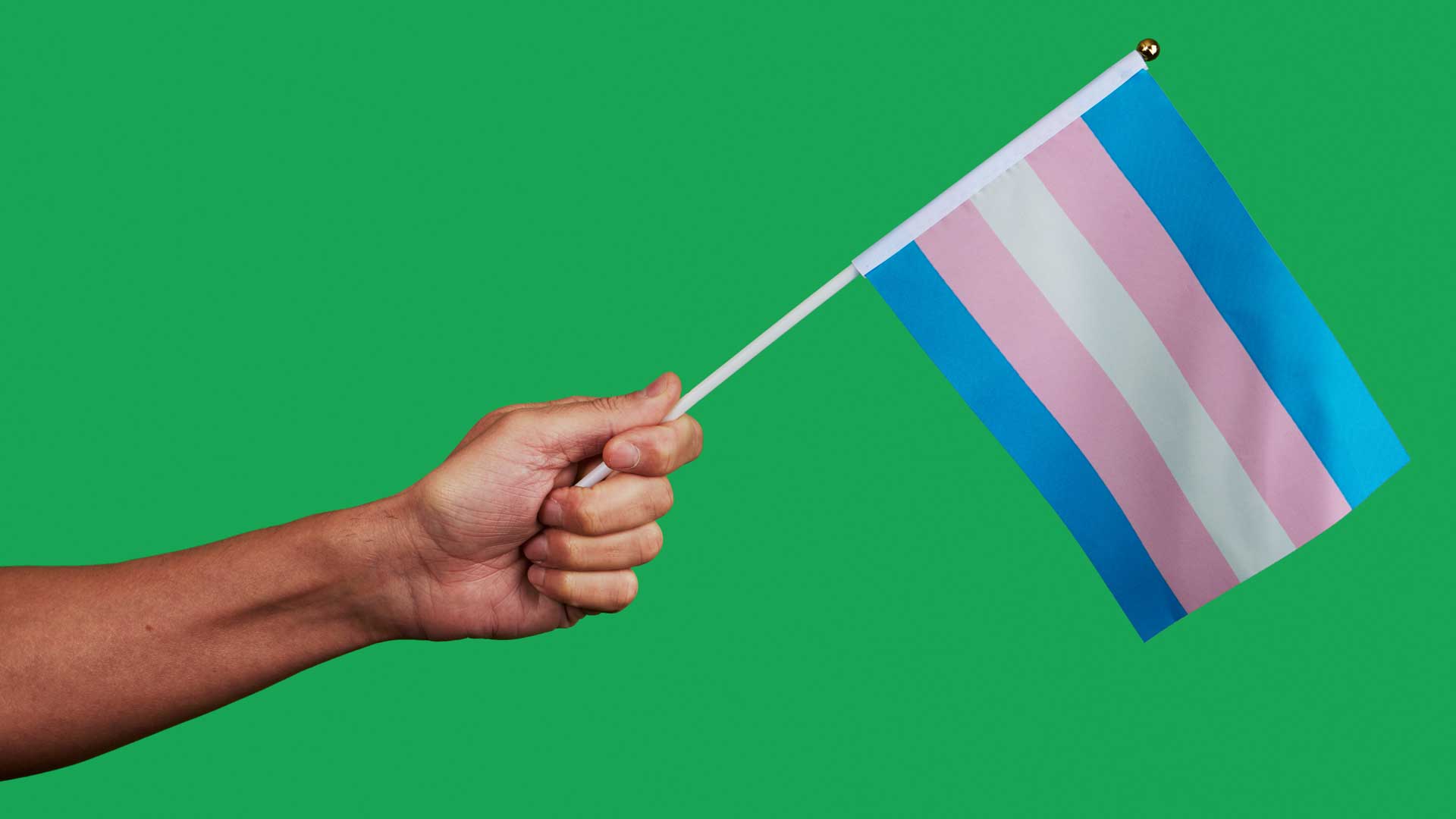
The recent ruling by the Supreme Court that a woman is defined by biological sex under equalities law. The court sided with campaign group For Women Scotland, which brought a case against the Scottish government, arguing that sex-based protections should only apply to people who are born female.
Judge Lord Hodge said the ruling should not be seen as a triumph of one side over the other and stressed that the law still gives protection against discrimination to transgender people.
However, across social media and some elements of the mainstream media, the decision has been framed as a feminist triumph and a victory for ‘common sense’.
The truth of the matter is that while biology is, apart from very rare cases, binary, humans are more complex and don’t always fall into the categories that evolution decrees. And this means that while there are ‘winners’ in the legal case, the decision will also create losers.
For me, it hasn’t felt like a victory at all. It feels like a line has been drawn and divisions have been reinforced, with those on one side more entrenched and those on the other more defensive and now afraid.
Let’s be clear: I don’t claim to have all the answers, and for such a difficult subject, I’m not sure there are. There have been suggestions that ‘third spaces’ should be established for trans people. To me, this seems like othering and exclusion, which certainly is not something to celebrate.
The danger of side-swapping
It is habitual to look for easy answers and to try to distil complex situations down to easy black and white arguments, to see things as good or bad, black or white. But life usually exists in the grey, where the answers don’t come easily.
The ‘trans debate’ doesn’t have an easy answer, and whereas once there seemed to be momentum towards inclusion for trans women, now there’s a sharp turn away from it, with a lot of organisations that previously jumped on the trans ‘ally’ bandwagon pivoting away.
That’s not the world I want to be part of. And it’s not the type of workplace culture any of us should be striving to build either, because it doesn’t just leave people behind, it leaves people hurt, wondering when inclusion became conditional. It sets up the idea that belonging is something that can be taken away.
Speaking from experience, but not speaking for others
As a woman who could never have children, I know what it feels like to be edged out of a narrative that claims to speak for “all women.” I remember sitting in a talk about womanhood by Caitlin Moran where motherhood was positioned as the gold standard – the definition.
Shrinking into my seat, I felt quietly erased. Was I less of a woman because biology set a different path for me? I cannot and would never claim to fully understand the experience of my trans sisters.
But I know what it feels like to be told – implicitly or explicitly – that you don’t qualify. I understand the destructive narrative that says if you don’t fit, you don’t belong.
Polarisation isn’t progress
This isn’t about pretending there aren’t tricky questions to answer. There are. It’s not about shouting down concerns about safety either, because safety matters, and I have personally felt unsafe in gender-neutral spaces before, not because of trans women, but because of men.
But we have to be better than just swinging to the other extreme. We have to find ways to understand the nuance and to protect people without excluding others, to think more creatively, more compassionately, and more courageously. Because when we create spaces based on fear, we build walls instead of bridges, and no one really wins.
So, what can we do?
- Keep thinking about solutions that are inclusive and feel safe for everyone.
- Resist the temptation to see it as a win/lose, right/wrong battle.
- Reach out to people who might be impacted and listen.
- Talk about what can be done, not just what can’t.
- Remember: this could happen to you. One shift in narrative, one change in circumstance, and you could find yourself edged out, too. And you’d want people to stand up for you, right?
The world doesn’t need more sides. It needs more people willing to stand in the messy middle. It needs more people willing to say: Inclusion is hard work, but it’s worth it. Everyone deserves to belong because we are all human, and that should be enough.
Here at Laughology, we’ve supported various teams, workplaces, and organisations in developing inclusive cultures, managing those challenging conversations, and helping everyone feel like they belong. If you want to talk to one of our experts, please get in touch with doug@laughology.co.uk